





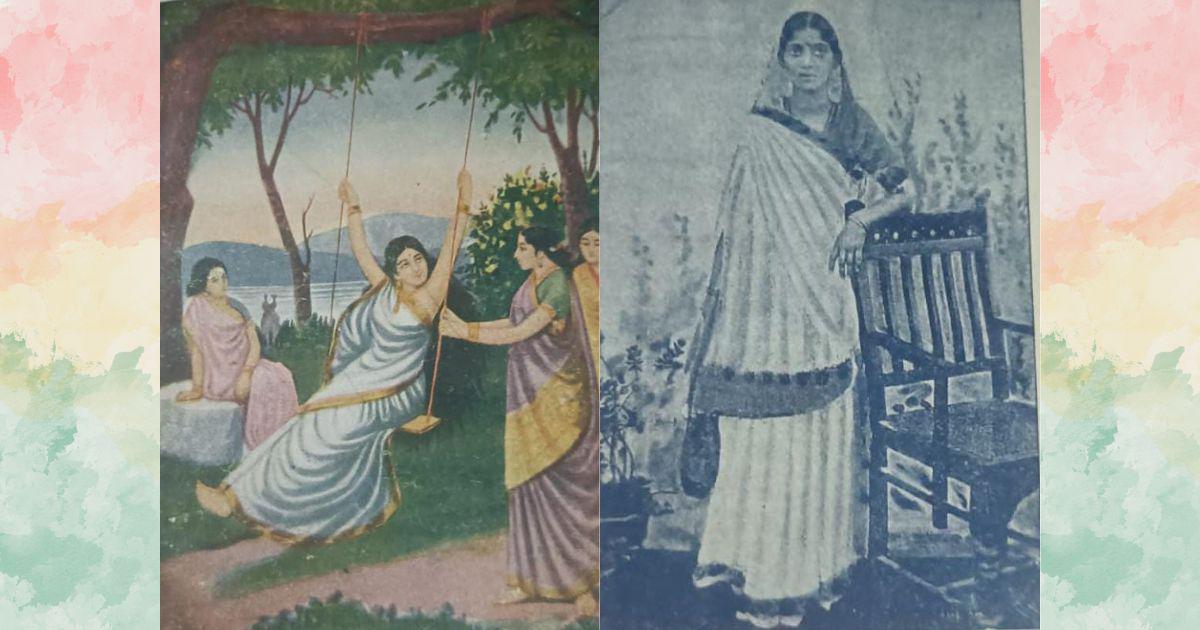
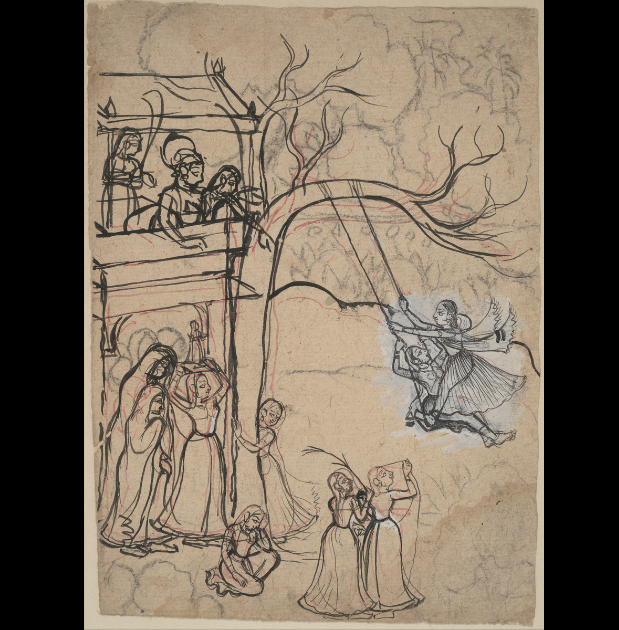
In the month of Sawan, when the monsoon darkens the skies, women in eastern Uttar Pradesh and western Bihar have gathered for generations to sing kajari – songs that are bound to the rhythms of agriculture. They are sung when crops are sown and the rains beat down on the fields.
Traditionally sung on farms and in courtyards, kajari often resound with separation and longing. The lyrics dwell on the pain of wives whose husbands have gone away to the city to find work, the ache of desire in their absence and the wait for their return.
The Hori songs sung during Holi in the spring reflect a markedly different mood. Here, women’s voices burst with laughter and irreverence. These songs turn teasing, full of innuendo, openly mocking men and in-laws, even joking about sex.
These songs have offered Bhojpuri women, especially those from lower and intermediate castes, a language to express thoughts that were otherwise left unsaid in everyday life. They are not just entertainment, but forms of expression where desire, grief, satire and even sexuality could surface.
Sung in public and as a group, these performances give women a space beyond the confines of their male-dominated households to shape narratives of desire and dissent on their own terms.
But in the late 19th and early 20th centuries, when these songs were published in booklets, the educated upper-caste men who put together these collections sought to sanitise the genres to give them “respectability”. They were influenced by both Brahmanical and colonial senses of morality. This, historian Charu Gupta said, often involved the effacement of women’s sexuality and desire.
The dual existence of kajri and hori in song books and in Indian villages reflects larger questions about cultural power. Who decides what counts as “authentic” folk? What happens when oral traditions shaped by women at the margins are filtered through the expectations of elites?
‘Cleaning up’ music
It was in the emerging world of the print medium that these struggles over respectability and control are most visible. The Hindi print world that emerged from the 19th century was vibrant. It also had a Hindu upper-caste character. In Banaras, Allahabad, Kanpur and other cities of North India, the educated, Hindu elite used publishing houses, journals and literary associations to define what they believed counted as refined culture.
As literary scholar Vasudha Dalmia has shown, Hindi literary figures such as the writer Bharatendu Harischandra used print publications to fashion Hindi as the language of a modern Hindu nation.
Against this backdrop, the publication of Bhojpuri folk genres was never neutral. Upper-caste Hindu editors and collectors were drawn to folk genres like kajari and hori because they offered both cultural capital and political utility. Folk songs represented an “authentic” cultural resource – a living tradition that could be mobilised to build pride, national identity and a sense of rootedness in the locality.
But they also posed a problem. Their frank eroticism, their association with low-caste women and their unruly performance contexts did not fit easily with reformist ideals of respectability or nationalist projects that demanded discipline and moral order.
For instance, Kamalnath Agarwal, the compiler of Kajali Kaumudi, published in 1941, declared at the very outset that his collection was free from “ashleelta” (obscenity) and presented in “uttam” (high) Hindi.
He admitted in his preface that kajari had traditionally been sung by women to celebrate the monsoon but there was not a single female contributor in his collection. Instead, it was filled with upper-caste male writers such as Bharatendu Harishchandra, Premghan and Ambikadutt Vyas.
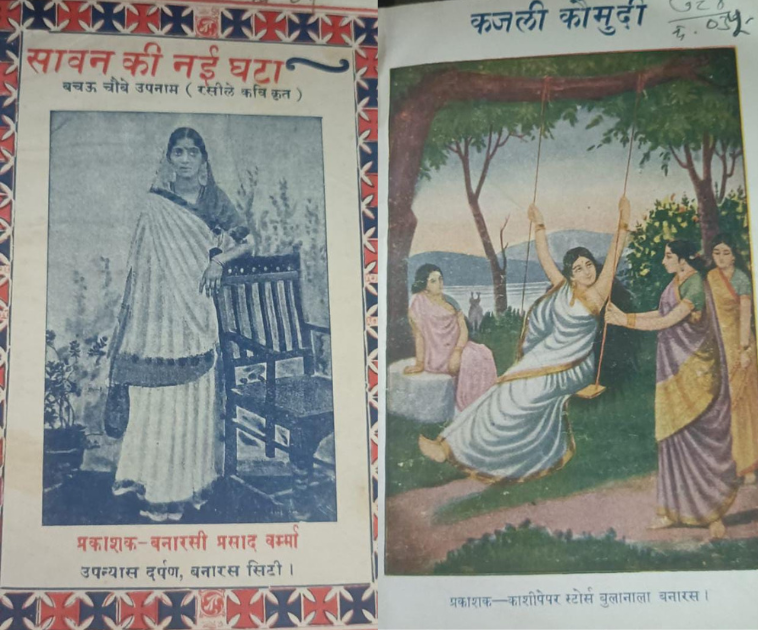
Agarwal inserted themes that bore little relevance to the lives of the lower-caste women who performed these songs. The anthology linked the history of kajari to a larger narrative of Hindu resistance against Muslim “invasions”. The editor portrayed festivals as symbols of Hindu perseverance and members of the Kshatriya caste as protectors of dharma.
Nationalist themes were prominent. The compiler of Kajali Kaumudi explains that his project was motivated by a kajali dangal (song competition) organised by the Congress party. This triggered in him a sense of patriotic duty to collect the “best” kajaris, written by upper-caste authors. One such kajari, titled Swaraj Kaisa Ho? (“What should freedom look like?”), declares:
“Kapda apne mulk ka ho, mulk me apne bane /
Jo tizarat ho vah apni ho hamesha khush rahe /
Dastkaari sab kare, ghar ghar me jab charkha chale …”Clothes should be of our own country, made in our land.
Let all trade be ours, so we may always prosper.
Everyone works with their hands, when the spinning wheel hums in every home …
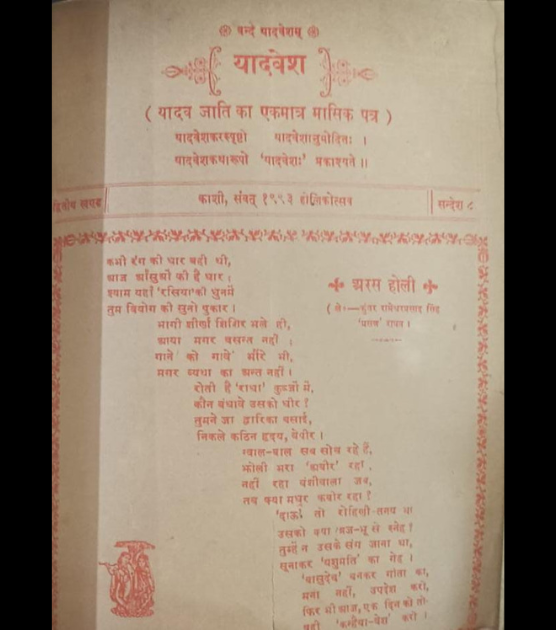
The impulse to sanitise and discipline was not limited to upper-caste reformers. Even among members of the intermediate castes, similar ideas circulated. An example of this can be found in an article in 1936 from Yadavesh, a popular monthly published in Banaras for the caste reform of the Ahirs, also known as Yadavs.
The article laments the practice of women singing “obscene” hori songs and insists it be abandoned for the community to achieve respectability.
By this time, kajari and hori had already shifted away from their roots. They had been taken over by male singers and akharas, losing their vitality to city-based troupes. In print too, the new language and styles reflected a cultural world controlled by men, from which low-caste women were excluded.
A form that had once been a collective performance of women had been claimed by men.
Yet, even in the most sanitised collections, traces of female desire survived. Male writers and editors struggled to disguise the erotic undertones of kajari and hori and to entirely suppress their irreverence.
Take this stanza from the anthology Nayi Kajali: Sawan ki Nayi Ghata, published in 1937.
Chhad de bahiya humari re sanvaliya /
Gokul door bhayavan marag sir pe gagariya bhaari re sanvaliya /
Jaat Ahir peer nahi jaane tum toh nipat anari re sanvaliya …Leave my arm alone, beloved,
Gokul is far and the path is frightening, with a water pot balanced on my head, beloved.
You, an Ahir, do not understand a woman’s pain — you are completely naive, beloved.
What survives, what is lost
Despite these efforts to sanitise the tradition on paper, in North Indian villages, women carried on singing bawdy horis at Holi, laughing loudly in public and mocking men.
Over time, these genres have taken on parallel lives. On the one hand, kajari has entered the domain of semi-classical music. Musicians from Banaras and Lucknow have presented kajari on radio and in concert halls, stripping it of ribald humour and turning it into refined expressions of longing.
But on the other hand, the irreverence has persisted in rural Bhojpur. Women still sing kajari in Sawan, with lyrics studded with sexuality, satire and dissent against the control of their lives by men.
These Bhojpuri women’s songs show that while the print medium and performance circuits managed to tame folk into respectable forms, they could not erase these traditions in lived practice.
Chandranshu Yadav is a fourth-year undergraduate student at Ashoka University.
Pratyay Nath is Associate Professor of History, Ashoka University.
